
According to a recent article in Medical News Today, certain food additives found in processed foods may be responsible for the rise in colorectal cancer rates in the mid-twentieth century. Dietary emulsifiers are the prime culprit. These “detergent-like molecules [are] added to modern processed food” to create a smooth texture that is pleasing to the palate. While they may seem harmless, according to researchers at the Institute for Biomedical Sciences at Georgia State University, these additives actually alter microbes in the gut, creating “an environment favorable for the development of cancer.”
Our bodies have built-in defenses against harmful bacteria, but chemically-created food additives are wreaking havoc. Normally, its mucus covering protects the intestines from the invasion of bad bacteria, but emulsifiers actually appear to carry harmful bacteria across the cells lining the intestines, changing the gut environment. When these changes in the gut microbiota are severe, inflammation can result. That inflammation can lead to Irritable Bowel Disorder (IBD) and even colorectal cancer.
The most common food additives linked to inflammation are polysorbate-80 and carboxymethylcellulose, both emulsifiers. Polysorbate-80, also known as Tween 80, is a yellow-colored liquid found in foods, cosmetics, vitamins, vaccines, and medicines. It makes products look and taste creamier, bulks foods up, and acts as a binder for ice creams and puddings. Additionally, polysorbate-80 helps dissolve ingredients so they can more easily blend together (Source: The Good Human). Look for polysorbate-80 in chewing gum, ice cream, gelatin, and shortening.
Carboxymethylcellulose, also known as cellulose gum or CMC, is used in foods as a thickener and to stabilize emulsions as well as a source of fiber because it is not absorbed (Source: Be Food Smart). It’s also used in nonfood products such as detergents, artificial tears, toothpaste, and laxatives. But don’t be fooled! CMC is not a natural fiber source, and it does not provide the same health benefits as the fiber found in legumes, grains, fruits, and vegetables. Look for CMC in ice cream, salad dressings, cheese, gelatin, infant formula, and candy.
You should try to avoid all food additives but especially polysorbate-80 and carboxymethylcellulose as these have been linked to colon cancer.
What can you do?
- Shop and eat organic. According to the USDA’s National Organic Program, synthetic additives like polysorbate-80 and carboxymethylcellulose are not allowed in organic foods. Therefore, an easy option is to simply buy organic.
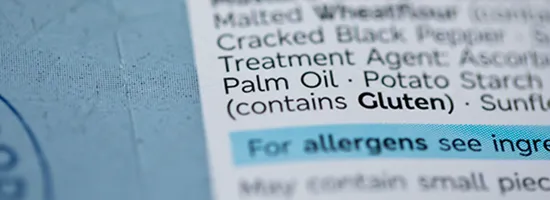
- Read food labels. Buying all organic foods can be very expensive. A more frugal and prudent option is to check the ingredients listed on the products you buy. Steer clear of anything with polysorbate-80 or carboxymethylcellulose. Choose foods containing natural preservatives like ascorbic acid, citric acid, vinegar, salt, and sugar. It’s a good rule of thumb to avoid any foods containing ingredients you are unable to read.
- Avoid all food additives including artificial flavorings, textures, and colors. Again, you must read your food labels or buy organic.
- Cook and eat fresh, whole foods.
- Promote a healthy gut and eliminate bad bacteria by doing the following: (1) regularly taking probiotics; (2) lowering stress; (3) eating fermented foods like saurkraut, kefir, yogurt, and kombucha; (4) limiting refined sugar; and (5) regularly consuming bone broth.
Food additives are everywhere, but unless you’re actively looking for them, you may not realize how common they are. Polysorbate-80 and carboxymethylcellulose are two such additives that have recently been linked to alterations in gut bacteria and even colon cancer. Be proactive with your colon health by buying organic, reading food labels and making good health-conscious choices, eating whole foods, and promoting a healthy gut.